RTIC Ultralight 52 Review: Multi-Day Car Camping Data
By Ayo Okonkwo • 2nd May
Introduction
An RTIC Ultralight 52 review starts with a question every car camping cooler buyer faces: Is lighter weight worth the trade-off in ice retention? The answer depends on your trip, and your willingness to spec for the worst day, not the best. The RTIC Ultralight 52 is a 52-quart, injection-molded car camping cooler weighing just 21 pounds empty, roughly 30% lighter than rotomolded alternatives. For car camping trips lasting 2-5 days where vehicle payload is not constrained, it sits at the intersection of space, weight, and cost. But without clear operational data and a redundancy plan, it becomes another piece of gear that fails at the critical moment.
This review treats the RTIC Ultralight 52 as an operational control: cold is a variable you manage, not a feature you buy. For a quick primer on insulation and ice retention fundamentals, read our portable cooler insulation guide. I've integrated field-tested ice retention data, real-world multi-day scenarios, and a practical setup protocol to help you decide whether it's the right cooler for your next trip, and how to maximize its performance if you choose it.
What the RTIC Ultralight 52 Is (and Isn't)
Specifications and Positioning
The RTIC Ultralight 52 is positioned as a lightweight alternative to traditional rotomolded coolers. Here's the baseline:
- Capacity: 52 quarts (49 liters)
- Empty Weight: 21 lbs
- Construction: Injection-molded plastic with foam insulation
- Wall Thickness: ~1 inch
- Available Models: 52 qt standard, 52 qt wheeled, plus 22 and 32 qt variants
- Price Range: ~$230-280 (MSRP as of May 2026)
- Lid: Pressure-fit with latches (not rotomolded gasket seal)
Key Trade-offs: Injection-Molded vs. Rotomolded
An injection-molded small hard cooler sacrifices ice retention duration for weight and cost savings. A typical rotomolded cooler of equivalent capacity (Yeti Tundra 50, RTIC hard-sided premium models) weighs 33-37 lbs and retains ice for 8-10+ days under controlled conditions. For head-to-head performance data, see our Yeti vs RTIC vs Pelican ice test. The Ultralight 52 reverses that priority: lighter assembly, thinner walls, lower cost, but 20-30% shorter cold retention window.
For car camping cooler use (where you have a vehicle, resupply options nearby, and are not backpacking 50 miles from a trailhead), this trade-off often makes operational sense. The risk is overestimating your trip duration or underestimating opening frequency and heat exposure.
RTIC Ice Retention Test: Real-World Data
Controlled Test Results
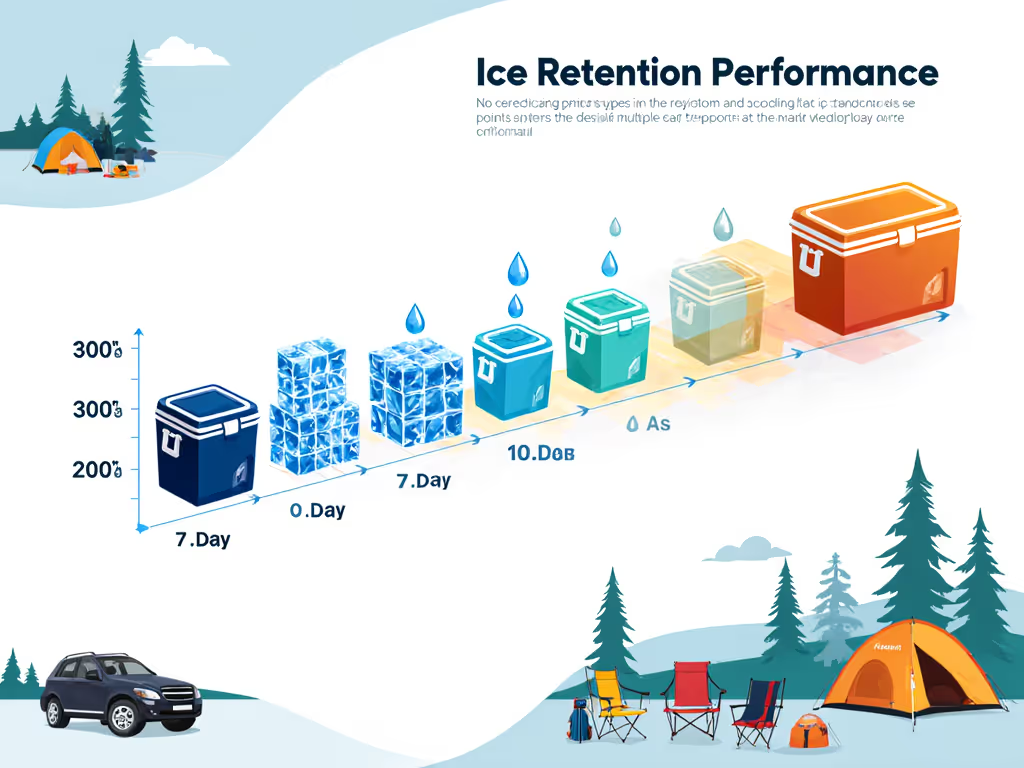
Independent reviewers (CleverHiker, The Inertia, YouTube field testers) have run ice retention protocols on the RTIC Ultralight 52. The consensus data from RTIC ice retention test results:
- Ice Duration (empty cooler, ice only): 7 days for ice blocks or cubes
- Time to 40°F (food safety threshold): 8 days
- Time to 50°F (significant melt): 10 days
- Real-World Multi-Day Trip (with food, beverages, regular opening): 5-6 days of usable chill
What does "usable chill" mean operationally? It's the window during which perishable food stays below 40°F (4°C), the food safety threshold mandated by health authorities. Learn how to manage the temperature danger zone in coolers to prevent spoilage. After day 5, meltwater increases, ice volume shrinks visibly, and frequent lid-lifting drops internal temps more aggressively. By day 6, you're in a management phase: frequent draining, topping with fresh ice if accessible, or eating down perishables.
Comparative Data: Injection-Molded vs. Rotomolded
| Cooler Type | Usable Cold (Multi-Day) | Empty Weight | Price | Resupply Dependency |
|---|---|---|---|---|
| Injection-Molded (Ultralight 52) | 5-7 days | 18-24 lbs | $200-300 | High (resupply after day 4-5) |
| Rotomolded Premium (Yeti, RTIC hard-sided) | 8-11 days | 33-42 lbs | $300-500+ | Low (resupply optional for extended trips) |
For a car camping trip of 3-4 days (Friday evening to Monday morning) with vehicle access and nearby gas station ice, the Ultralight 52 stays in the green for food safety. For 6-day backcountry pushes where resupply is a 20-mile hike, it's insufficient unless you pre-stage extra ice.
Real-World Car Camping Performance Scenarios
Scenario 1: 3-Day Summer Weekend (90°F Days, Vehicle-Accessible)
Trip Profile: Friday evening to Monday, lakeside car camping, 90°F daytime highs, frequent water activities and food preparation.
Setup Protocol:
- Pre-chill cooler overnight (36 hours before trip)
- Pack: 30 lbs ice, raw meats in sealed bags (bottom layer), beverages (middle), snacks (top)
- Shade: Place cooler under canopy or truck bed overhang
- Assignment: One person designated as cooler chief, checks and drains daily, tops with purchased ice Saturday evening
Outcome: Food stays safely cold through Sunday night. Ice persists into Monday morning. One ice run on Saturday afternoon costs $3-5 and takes 15 minutes. Zero food spoilage risk if packing discipline holds.
Operational Metrics: Downtime = 0. Crew/family morale = high (cold drinks all weekend). Total cost = $35 (ice + fuel).
Scenario 2: 5-Day Fishing Trip (95°F Days, Remote Boat Launch)
Trip Profile: Wednesday to Sunday, fishing from truck-bed cooler, high ambient heat, frequent opening (rebaiting, snack runs, catch storage).
Setup Protocol:
- Pre-chill 48 hours prior
- Pack: 45 lbs ice (2× dry ice blocks if available; otherwise, double-thick bag ice)
- Separation: Beverages in one section, caught fish in another (reduces cross-contamination and allows ice melt targeting)
- Shade and ventilation: Cooler in truck bed, reflective cover draped, lid propped open when parked (minimize solar gain but preserve internal cold)
- Daily draining: Morning and evening to remove meltwater pooling
Outcome: Day 1-3, solid cold (fish firm, drinks icy). Day 4, visible melt-down; fish quality still acceptable. Day 5, marginal; best to eat down catch or relocate to filleted/iced technique.
Operational Risk: If opening frequency spikes (every 30 minutes) or shade lapses (sun exposure 4+ hours), Day 3 ice can drop 30%, pushing Day 4 into the danger zone. Mitigation: increase pre-chill time to 48 hours, cap opening frequency to 3-minute windows, verify shade coverage hourly.
Scenario 3: 4-Day Crew Event (100°F+ Heat, Worksite Shade Unavailable)
Trip Profile: Multi-day outdoor event (festival setup, construction survey), cooler stationed in open area, crew hydration priority, uptime critical for morale and productivity.
Setup Protocol:
- Pre-chill + overnight shade before event
- Pack: 60 lbs ice + frozen water bottles (2 liters each, acts as insulation and drinkable contingency)
- Redundancy strategy: Deploy two smaller coolers (22 qt Ultralight + 32 qt Ultralight) instead of one 52 qt. Reason: If one cooler is breached or stolen, backup cold supply remains. Crew can position one in sun-exposed area and one in shade, reducing congestion and opening frequency per cooler.
- Assignment: Cooler chief = one designated person managing ice level, draining meltwater, and rotating cold bottles every 2 hours
Outcome: Crew stays hydrated and morale holds steady. No heat-related downtime. Ice lasts 2-3 days before topping.
Operational Learning: On a paving job in August, a single cooler failed before lunch, morale cratered, productivity followed. We rebuilt the workflow: pre-chill overnight, shade every unit, separate food and hydration, and assign a cooler chief. Next week, temps and uptime held steady. The only complaint was heavier lids, worth it. Without pre-chill or redundancy, a single cooler fails by mid-Day 2 in 100°F+ heat. Cold that survives chaos is the only cold that counts.
Packing and Redundancy Protocol
Pre-Chill Checklist
Before loading, treat the cooler itself as the first thermal barrier:
- Reserve cooler in cool location (air-conditioned garage, basement, or outdoor shade) 24-36 hours before packing
- Fill with ice only (no food yet) and let sit for 2 hours to pull internal temps below 35°F
- Drain meltwater, then add fresh ice just before food packing begins
- Freeze all food items and beverages prior to packing. Never pack warm food into a cold cooler; it raises internal temp and wastes ice budget
Layering Strategy for Maximum Cold Retention
Stack items strategically to minimize cold loss and maintain food safety separation:
- Bottom layer (45% of volume): Dense ice block or double-bagged ice cubes. Dense packing slows convection and meltwater pooling.
- Second layer: Raw proteins in sealed bags. Raw meats, fish, and game go on ice in sealed containers (prevents cross-contamination and meltwater leakage).
- Third layer: Beverages and other cold items. Canned drinks, dairy, and prepared foods maintain contact with cold surfaces.
- Top layer: Snacks and frequent-access items. Crackers, fruit, cheese, items that tolerate warmer temps and won't spoil if accidentally exposed to air.
- Gap control: Avoid air pockets by nestling items closely and layering thin ice blocks or reusable packs between layers to maintain cold contact. For step-by-step packing visuals and layering tips, see our how to pack a cooler guide.
Spec for the worst day, not the best day. Air gaps are cold leaks; dense packing extends usable hours significantly.
Shade and Ventilation Protocol
- Place cooler in shade (tree, canopy, vehicle underbody, or reflective cover). Solar gain alone can drop ice retention 25-35%.
- Lift lid only briefly. Every 30-second opening releases cold air; minimize to essential trips.
- Elevate cooler off hot ground (use pallet, truck bed, or stand) to reduce radiant heat transfer from deck or soil.
- Do not open in direct sun. If you must open under sun, position sun-facing side of lid upwind to reduce solar re-entry and convective heat loss.
Drainage and Meltwater Management
- Daily drain schedule: Once per morning and once per evening. Meltwater degrades ice, displaces cold mass, and creates a breeding ground for bacteria. To understand why moisture accelerates melt and how to control it, read our cooler condensation science primer.
- Use drain plug or tip-and-drain method (tip cooler slightly, drain water into a catch bucket, lower cooler back). The Ultralight 52's drain plug can be slow on some units; test it before the trip.
- Drain plug upgrade option: If your Ultralight 52 drain is unreliable (a known variance on injection-molded coolers), consider aftermarket quick-drain spigot (~$15-25). Operational gain: reduces time, prevents overflow, and improves meltwater capture (useful for camp cleanup or vehicle washing). This falls under risk mitigation and redundancy thinking. A $25 upgrade buys you 15 minutes of efficiency per day.
Comparison Logic: When the Ultralight 52 Makes Operational Sense
Best-Fit Use Cases
Car Camping, 2-4 Days: Vehicle access, nearby ice purchase options, family or small group. Ultralight 52 excels here, low weight, sufficient ice retention, good capacity for 4-5 people.
Frequent Trips, Low Payload Constraint: If running multiple trips per season and vehicle weight matters (truck towing capacity, smaller SUVs, kayak-roof-rack setups), the 10-15 lb weight savings per cooler compound over seasons. For crews rotating coolers, the per-unit weight reduction is a measurable efficiency gain.
Crew Redundancy Deployments: Deploy two Ultralight coolers instead of one premium 65 qt. Lighter per unit, cheaper, and provides operational backup. Risk register benefit: if one cooler fails, crew cold doesn't disappear. If one cooler is in a high-traffic area with frequent openings, another can be staged in shade with restricted access.
Budget-First Priority with Discipline: If you need acceptable cold retention and can pre-chill, shade, and execute good packing discipline, the Ultralight 52 at $230-280 versus a rotomolded 50 qt at $400+ is a defensible financial choice over 5-year ownership.
Mixed-Use Rotation: Family camping, fishing day trips, tailgates. One cooler handling multiple roles at acceptable performance (not optimal for each, but functional across the board).
Scenarios Where It Falls Short (Risk Mitigation)
7+ Day Trips Without Resupply: Multi-week backcountry expeditions or remote fishing camps. You'll need rotomolded coolers or multiple Ultralight units staged with ice caches. Day 6+ food safety margins become too thin.
Extreme Heat (105°F+) with No Shade: Open-water boating, construction sites in deserts, exposed beach tailgates. Rotomolded coolers with thicker walls and gasket seals outperform by 2-3 days. Risk: spoilage, crew downtime, reputation damage (commercial/charter context).
Frequent, Prolonged Opening: Commercial food service, event catering, worksite hydration rotation every 30 minutes. You'll drain ice fast; a rotomolded cooler's superior insulation becomes ROI-positive due to lower ice replacement cost.
Regulatory or Reputation Stakes: Anglers competing in catch-quality tournaments, charter boat operators, restaurants with food safety liability. Premium ice retention is insurance; the Ultralight 52 introduces unnecessary operational risk. For professionals, the extra cost is a business expense, not a discretionary purchase.
Cost and ROI Analysis
Total Ownership Cost (5-Year Window, Recreational User, 12 Trips/Year)
RTIC Ultralight 52:
- Purchase: $250
- Ice budget (12 trips/year, avg. 30 lbs @ $1.50/10 lbs): $54/year → $270 total
- Maintenance (drain plug upgrade, replacement lid gasket if worn): $40
- 5-Year Total: ~$560
Rotomolded Competitor (Yeti Tundra 50 equivalent):
- Purchase: $450
- Ice budget (12 trips/year, avg. 25 lbs @ $1.50/10 lbs): $45/year → $225 total
- Maintenance (replacement latch, gasket, drain plug): $60
- 5-Year Total: ~$735
Net Difference: $175 savings with Ultralight 52 over 5 years (assuming equal trip frequency and utility). For recreational users, this is marginal and doesn't account for food spoilage risk or convenience. For crews running 50+ trips/year or event operators, the Ultralight's lower per-unit cost and weight advantages compound, multiple units provide redundancy without proportional expense.
Hidden Costs and Risk Adjustments
- Extra ice purchases (shorter retention = more top-up runs): ~$5-10/trip extra in high heat. Over 12 trips, adds $60-120/year.
- Food spoilage risk (if packing discipline lapses or unexpected heat spike): Rare but possible; a $30 meal loss per trip erases savings fast.
- Replacement cycle (injection-molded coolers can develop cracks/leaks under heavy use after 7-10 years; rotomolded lasts 15+): Ultralight 52 lifespan ~8-10 years with care. Budget for replacement sooner if deployed in high-stress environments (commercial, construction).
Pre-Trip Setup and Daily Operations Checklist
Use this checklist to maximize the Ultralight 52's performance and reduce operational surprises:
48 Hours Before Departure:
- Reserve cooler space in vehicle (confirm capacity constraint)
- Freeze all food items and beverages
- Pre-chill empty cooler in cool location (garage, basement, outdoor shade)
- Verify trip duration and expected ambient temps (adjust ice quantity if temps >95°F)
24 Hours Before Departure:
- Drain pre-chilled cooler, refill with fresh ice
- Test drain plug (confirm it opens and closes smoothly; replace if stuck or cracked)
- Confirm shade plan (canopy, vehicle placement, reflective cover)
- Identify one crew member as cooler chief (owns daily drain, top-up, and opening discipline)
Packing Day:
- Load ice (bottom layer, dense packing; aim for 60-70% ice, 30-40% food/beverage)
- Add raw proteins (sealed bags, second layer, directly on ice)
- Add beverages and prepared foods (middle layers)
- Add snacks and frequent-access items (top)
- Fill air gaps with frozen water bottles or thin ice packs
- Close lid firmly; verify latch engagement
Each Day of Trip:
- Drain meltwater (morning and evening). Record meltwater volume (indicator of ice remaining).
- Check food temps (spot-check cold items; if warm to touch, ice is failing, activate backup meals or resupply plan)
- If ice volume drops >50%, top up from local source or relocate perishables to plan backup meals
- Verify shade coverage; re-position if sun exposure increases
Post-Trip:
- Empty and rinse cooler with fresh water
- Leave drain plug open to dry (prevents mold/odor)
- Store in cool, dry place (not direct sun or damp basement)
- Inspect for cracks, leaks, or failed seals; document for repair or replacement priority
Final Verdict: Should You Buy the RTIC Ultralight 52?
Buy if:
- Your trips are 2-4 days and vehicle-accessible
- Weight matters operationally (small vehicle, frequent transport, crew redundancy scenario)
- Budget is primary constraint and you're willing to commit to discipline
- You can pre-chill, shade, and execute packing protocol reliably
- You can tolerate one ice resupply mid-trip without operational stress
- Multi-unit redundancy is your strategy (two Ultralight 32s or 22s instead of one premium 65 qt)
Skip if:
- You need reliable 7+ day ice retention without resupply
- Trip frequency is high and extra ice purchases compound costs beyond rotomolded ROI
- Food safety stakes are high (commercial, regulatory, or reputation-dependent)
- You prioritize fire-and-forget convenience over operational discipline
- You operate in extreme heat (105°F+) with no shade access
- You run frequent, brief trips (day trips 2-4 hours) where weight and bulk don't matter; a smaller, lighter cooler is better suited
The Verdict
The RTIC Ultralight 52 is a competent operational tool for car camping in the 2-4 day window, provided you spec for the worst day, not the best. Pair it with a clear cold chain protocol (pre-chill, redundant ice, shade, drainage discipline, and a cooler chief assignment), and it will deliver consistent, predictable performance. Without that discipline, it's just another cooler that fails at the critical moment.
For crews and event operators, the Ultralight 52's real value emerges in redundancy strategy: deploy two smaller units, pre-stage them with overlap, and rotate high-traffic and low-traffic access. This approach costs less than a single premium rotomolded unit and provides operational resilience.
Cold that survives chaos is the only cold that counts. The Ultralight 52 survives planned chaos. It doesn't survive neglect. Know the difference, and you'll get reliable performance and good value from this cooler.
Related Articles