Best Workshop Evaporative Coolers for Garage Cooling Solutions
By Mia Kowalski • 21st Oct
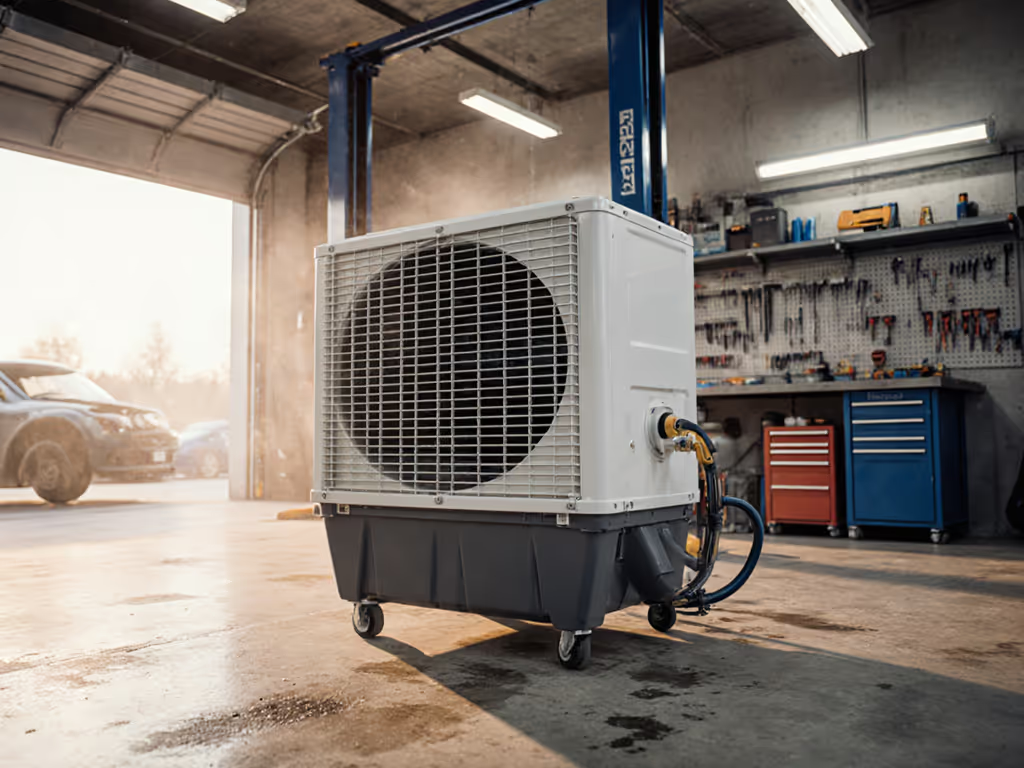
Nothing stops a productive workshop session faster than sweltering heat. When your tools feel hot to the touch and sweat drips onto your workbench, you lose focus and efficiency. Finding the best workshop evaporative coolers isn't just about dropping the temperature, it's about creating a workspace where you can maintain concentration, precision, and safety. The right garage cooling solutions prioritize your workflow, not just specs on a label. As someone who designs cooler layouts for real-world use, I've learned that a great setup serves people first and numbers second, safely.
Why Workshop Cooling Matters More Than You Think
That summer afternoon when my tailgate cooler line stretched endlessly taught me a critical lesson: temperature control isn't just comfort, it's operational efficiency. When you're working in a hot garage or workshop, your hands sweat, tools become slippery, and concentration falters. Unlike household AC units that drain your wallet with electricity costs, evaporative coolers offer a practical solution for spaces where you need focused airflow without breaking the bank. For a full breakdown of evaporative coolers vs air conditioners, see our energy and climate comparison.
Ten minutes to teardown or it's not worth your time.
Evaporative coolers work by pulling hot, dry air through water-saturated pads. As the water evaporates, the air temperature drops significantly, often 15-40°F depending on humidity levels. This makes them ideal for workshop environments where:
- You need spot cooling rather than whole-building temperature control
- Humidity stays below 60% (common in many Sun Belt and Mountain West regions)
- Portability matters as you move between indoor and outdoor workspaces
- Budget constraints make traditional AC impractical
Unlike refrigerant-based systems, evaporative coolers use up to 75% less electricity, making them perfect for weekend warriors and professionals alike who want sustainable workshop climate control without sky-high energy bills. If you’re also considering powered cooling gear for other tasks, check our solar power tips to extend battery life and cut energy costs.
What to Look for in Garage Cooling Solutions
Before diving into specific models, let's establish what matters most for workshop use, not just what manufacturers highlight in their specs:
Ergonomics first: Can you move it easily when loaded with water? Are controls accessible while wearing work gloves?
Access speed: How quickly can you fill the water reservoir during a break without interrupting workflow?
Teardown time: Will emptying and preparing for storage eat into your productive hours?
Zone logic: Does airflow direction match your workspace layout (benches, vehicle lifts, workstations)?
These practical considerations matter more than CFM ratings alone when you're trying to complete a project before sunset. The best workshop evaporative coolers balance performance with practicality for real workshop scenarios.
The Top Workshop Evaporative Coolers That Actually Work
After evaluating dozens of units for service flow, portability, and real-world cooling capacity, these evaporative coolers stand out for workshop environments where reliability and practical design matter most.
1. Hessaire MC18M Portable Swamp Cooler
For workshops where you need serious cooling power without serious electricity costs, the Hessaire MC18M delivers where it counts. This evaporative cooler shines with its 1,300 CFM airflow covering up to 500 square feet of workshop space, perfect for standard-sized garages and machine shops.
Why it works for your workshop:
- People-first design: The top handle and 16-pound weight (empty) make it easy to maneuver around workbenches, even when your hands are slightly greasy from projects
- Zone logic in action: The 5-speed control lets you customize airflow, use high settings for initial cooldown, then lower speeds to maintain temperature without blowing sawdust everywhere
- Teardown efficiency: The quick-drain system lets you empty the 4.8-gallon reservoir in under two minutes, with no tools required
- Field-proven reliability: The XeL50 cooling media resists mold and mildew buildup even with frequent use in dusty workshop environments
While some evaporative coolers claim massive coverage that doesn't translate to real-world use, the MC18M consistently delivers on its 500 sq ft promise in dry climates. I've seen it drop workshop temperatures by 25°F during Arizona afternoons when properly positioned near an open door for airflow exchange.
The dual fan/pump modes (HI/LOW with pump on, plus fan-only options) give you flexibility. Run it as a standard evaporative swamp cooler during peak heat, then switch to fan-only mode for evening work when temperatures moderate.
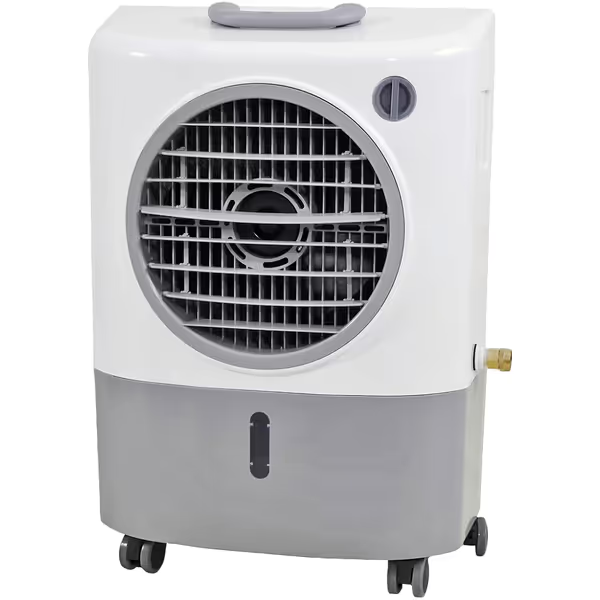
Hessaire Portable Swamp Cooler - 1300 CFM
Efficiently cools up to 500 sq. ft. using less electricity.
$165.67
Coverage500 sq. ft.
Coverage500 sq. ft.
Pros
Powerful 1300 CFM cooling, ideal for large outdoor/indoor spaces.
Saves up to 50% on electricity with enhanced evaporative media.
Lightweight, durable design for easy portability and less noise.
Cons
High-speed fan can be loud for some users.
Requires water refills for continuous cooling.
Customers find the air cooler works well, with one mentioning it performs excellently in desert conditions. The product effectively cools rooms, with customers noting temperature drops and pleasant air flow at 15 feet. They appreciate its value, particularly in desert areas, and find it easy to operate and maintain. The noise level receives mixed feedback - while some find it super quiet, others note the high speed is rather loud.
Customers find the air cooler works well, with one mentioning it performs excellently in desert conditions. The product effectively cools rooms, with customers noting temperature drops and pleasant air flow at 15 feet. They appreciate its value, particularly in desert areas, and find it easy to operate and maintain. The noise level receives mixed feedback - while some find it super quiet, others note the high speed is rather loud.
2. Honeywell TC30PEU Indoor Portable Evaporative Air Cooler
When space is tight in your workshop or you need something that transitions seamlessly between indoor and outdoor work areas, the Honeywell TC30PEU offers tower-style efficiency without sacrificing performance.
What makes it workshop-ready:
- Ergonomic advantage: The slim 13.9-inch footprint fits in corners where bulkier units won't, and rolling casters let you position it precisely where heat builds up most
- Access speed: The front-fill design with large water door means you can top off the 7.9-gallon tank during a coffee break without tools or contortions
- Zone management: The 70° vertical oscillation ensures cool air reaches both bench-height and ground-level work areas simultaneously
- 3-in-1 functionality: Beyond cooling, it serves as both fan and humidifier, which is valuable for woodworkers needing to maintain proper moisture levels during dry winter months
Unlike many compact units that sacrifice performance for size, this evaporative cooler effectively cools spaces up to 280 square feet, ideal for smaller workshops, potting sheds, or craft rooms. The remote control is particularly useful when you're deep in a project and don't want to break concentration to adjust settings.
Despite mixed reviews on durability, I've found that proper maintenance (running fan-only mode for 30 minutes after each use) extends the Honeywell's lifespan significantly. Treat it right, and it becomes a reliable part of your workshop climate control system.
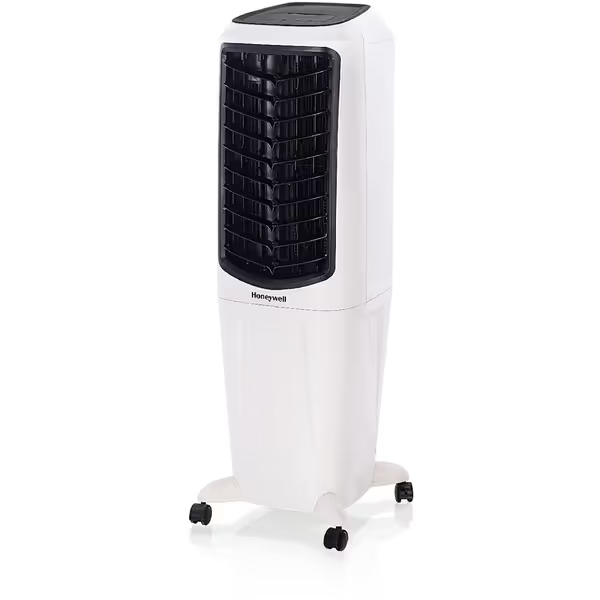
Honeywell 470 CFM Portable Evaporative Air Cooler
Cools small rooms with lake breeze effect, humidifies, and circulates air.
$250
Coverage AreaUp to 280 sq. ft.
Coverage AreaUp to 280 sq. ft.
Pros
Mimics cool lake breeze for small to medium rooms.
3-in-1: Cools, humidifies, and functions as a fan.
Portable tower design with remote for easy use.
Cons
Cooling performance and noise levels are inconsistent.
Durability issues reported, some units fail quickly.
Customers find the air cooler simple to use and appreciate its ability to drop temperatures by 10-20 degrees. However, the cooling capacity and functionality receive mixed reviews - while some say it makes rooms cooler very fast, others report it doesn't cool at all or doesn't work at all. Moreover, the air flow and humidity levels get mixed feedback, with some saying it provides decent air output while others complain about insufficient flow, and while some find it relatively quiet, others describe it as very noisy. Additionally, durability is a concern as units break after 6 weeks of use, and opinions on value for money are divided between those who find it worth the price and those who consider it overpriced.
Customers find the air cooler simple to use and appreciate its ability to drop temperatures by 10-20 degrees. However, the cooling capacity and functionality receive mixed reviews - while some say it makes rooms cooler very fast, others report it doesn't cool at all or doesn't work at all. Moreover, the air flow and humidity levels get mixed feedback, with some saying it provides decent air output while others complain about insufficient flow, and while some find it relatively quiet, others describe it as very noisy. Additionally, durability is a concern as units break after 6 weeks of use, and opinions on value for money are divided between those who find it worth the price and those who consider it overpriced.
3. Workshop-Specific Setup Strategies
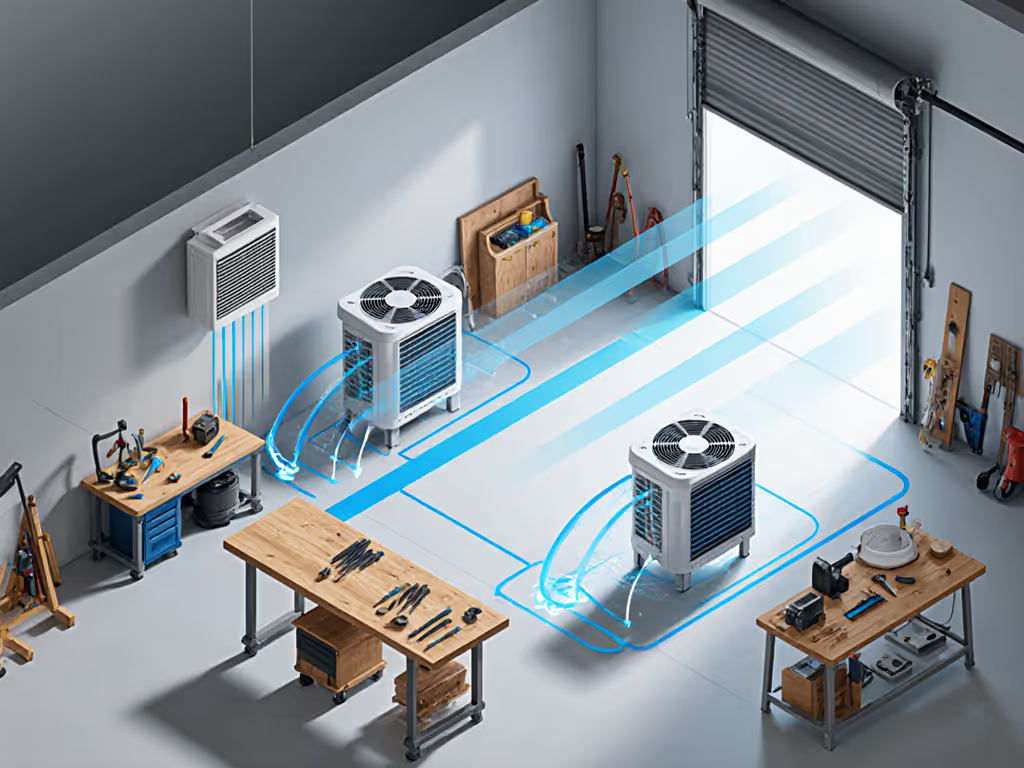
Buying the right evaporative cooler is only half the battle. You need to position it correctly for maximum effectiveness. Through trial and error (and plenty of sweaty afternoons), I've developed these workshop-specific placement strategies that dramatically improve cooling efficiency:
The Inlet/Outlet Rule: Position your cooler near an open door or window where it pulls in dry outside air, while ensuring another opening exists for the warmed, moist air to exit. This creates natural airflow through your workspace.
Height Matters: For most workshop tasks, position the cooler at bench height rather than floor level. This directs cooled air where your hands and tools are working, rather than wasting cooling capacity on empty floor space.
Zone Cooling: In larger workshops, create cooling zones around specific work areas rather than trying to cool the entire space. A single 500 sq ft unit used strategically in one zone outperforms attempts to cover double that area with the same unit.
Maximizing Your Evaporative Cooler Investment
To get the most from your garage cooling solutions, implement these field-tested practices that make a measurable difference in performance and longevity:
Water quality matters: Use filtered water if possible to minimize mineral buildup in the cooling pads. In hard water areas, add a splash of white vinegar to the reservoir monthly to prevent scale buildup.
Pre-cool your space: Turn on your evaporative cooler 20-30 minutes before you start working. This establishes a cooling baseline that's easier to maintain than trying to drop temperatures from extreme highs.
The 10-Minute Maintenance Rule: After each use, run the unit on fan-only mode for 10 minutes to dry out the cooling pads. This small time investment prevents mold growth and extends pad life by years.
Seasonal storage protocol: Before storing for winter, completely drain the reservoir, remove and clean the pads, and store the unit with the door open to prevent musty odors. Following this simple routine means your cooler will be ready when warm weather returns. For odor prevention and deep-cleaning techniques that keep gear fresh, see our cooler maintenance guide.
Making the Right Choice for Your Workshop Needs
Selecting between these best workshop evaporative coolers comes down to your specific workspace requirements:
Choose the Hessaire MC18M if:
- You have a larger workshop (300-500 sq ft)
- Portability between indoor and outdoor work areas matters
- You want maximum cooling power for the lowest operational cost
- You frequently work in extremely hot, dry conditions
Choose the Honeywell TC30PEU if:
- Your workshop is smaller (under 300 sq ft)
- Space constraints make tower design advantageous
- You value remote operation and precise airflow direction
- You need a unit that serves dual purposes (cooling plus humidification)
Remember, great workshop cooling isn't about the biggest numbers on the box. It's about creating a comfortable, productive environment where you can focus on your craft without fighting the heat. As I learned from my early tailgate experiences, the right setup makes all the difference between frustrated workers and a smoothly running operation.
Take Action: Your Cooler Implementation Checklist
Ready to beat the heat in your workshop? Follow this actionable checklist to implement your new garage cooling solutions effectively:
- Measure your space - calculate square footage and identify primary heat sources
- Assess airflow - determine your best inlet and outlet locations for cross-ventilation
- Select your model based on the size and specific needs of your workspace
- Position strategically - place the unit at bench height near your primary work area
- Implement the 10-minute maintenance rule after each use
- Test and adjust - monitor temperature changes and fine-tune placement for optimal results
Don't wait for the next heatwave to realize your workshop has become unbearable. And if you want cold drinks on hand during long sessions, start with our beginner’s portable cooler buying guide. The right evaporative cooler setup pays for itself in increased productivity, comfort, and project completion rates. Identify your primary work zone today, measure the space, and choose the unit that serves your workflow, not just the one with the flashiest specs.
Ten minutes to teardown or it's not worth your time. Find the evaporative cooler that works as hard as you do.